The effectiveness of a construction isn’t always determined the day it opens. The test is better five 10, ten and twenty years down the road. Is it still easy to keep the bathroom clean? Have the materials remained in good condition despite constant use by the public and weather? Does the structure remain naturally within the park? The most important issue is: did the original design result in a building which actually works?
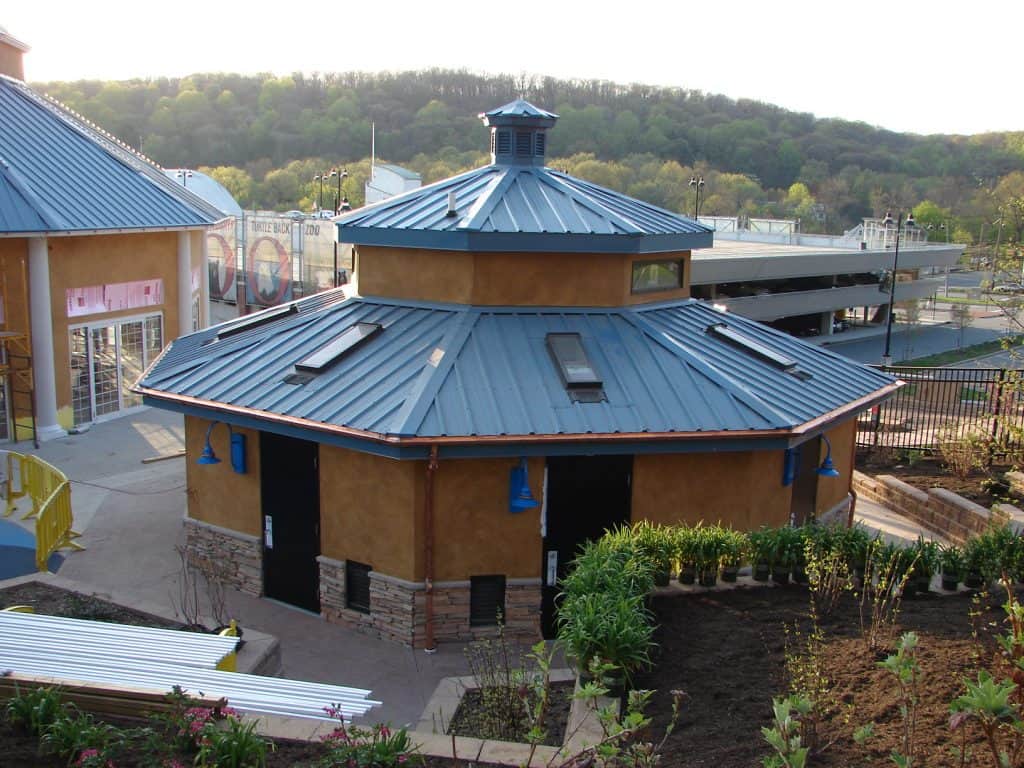
Image credit: romtec.com
Those questions illustrate why selecting the best park building designer involves more than comparing attractive renderings. Public architecture has to withstand permitting, bidding, and construction. It must also be maintained over many years of usage.
Design decisions can have consequences for operations
Consider something as basic as an exterior coating. This could affect the appearance but also the cleaning requirements, repairs costs, weather resistance, and the methods to remove graffiti. Roof design affects drainage and maintenance as well as the look of the space. The layout inside can affect the accessibility of a park, as well as visitor circulation cleaning, as well as fixture location.
Experienced best park restroom designers thus need to think simultaneously regarding design and operation.
Romtec works with landscape architects, contractors, as municipal officials to design customized restrooms. This is an alternative to standardizing the appearance of restrooms. Materials, shapes, and colors can be coordinated with the surrounding environment.
The drawing needs to be transformed into a real building
The concept might look great on screen but still cause issues when the pricing process or when construction starts. Building codes, ADA requirements, locally licensed architectural review, readily available components, structural requirements and construction costs are all part of the equation.
Romtec assists with projects by providing preliminary designs and estimates, bid sketches, specifications, renderings, engineered plans, and submittal paperwork. Romtec’s involvement helps bring the architectural concept through from design to construction.
Owners should take into consideration the middle of the project when evaluating the most reliable builder for parks restrooms. This is the place where inadequate specifications, unsuitable material selections, or a lack of coordination can become expensive.
Infrastructure refers to Public Restrooms.
The public restrooms are often overlooked as a part of the park. They function more as infrastructure.
In a busy bathroom that is used by families, children, and seniors may be using it simultaneously as maintenance workers as well as tourists, maintenance teams and visitors who have disabilities. In the context of the project, planners will need to consider ADA accessibility, durable surfaces and materials, air conditioning, utilities as well as vandal-resistant components and energy efficiency, accessibility to washrooms, and visitor capacity.
A campsite has different requirements that a typical park. A sports facility could see high traffic during games, while nearby parks could have moderate usage. The difference in use should impact the structure, rather than being resolved after the construction.
Budgeting without planning everything out
Cost control is unavoidable in public construction, but value engineering doesn’t have to require the removal of every unique feature.
Knowing actual material and construction costs prior to construction can allow designers to make better choices when it comes to tradeoffs. There is a chance to redirect money from a component that has low operational value toward a more sturdy material, a better fixture, or a design element that adds value to the building.
Romtec has experience with restrooms and other facilities such as pavilions and shelters for concessions showers, and multi-purpose facilities. This enables conversations to take place while the designs are in flux.
The fact is that a properly designed park bathroom is efficient in the sense that people do not have to think about it. It’s easy to access and well-designed, appropriate for its surroundings, reliable and constructed to last. This apparent simplicity hides the complexity of architectural, engineering and budgeting as well as documentation.